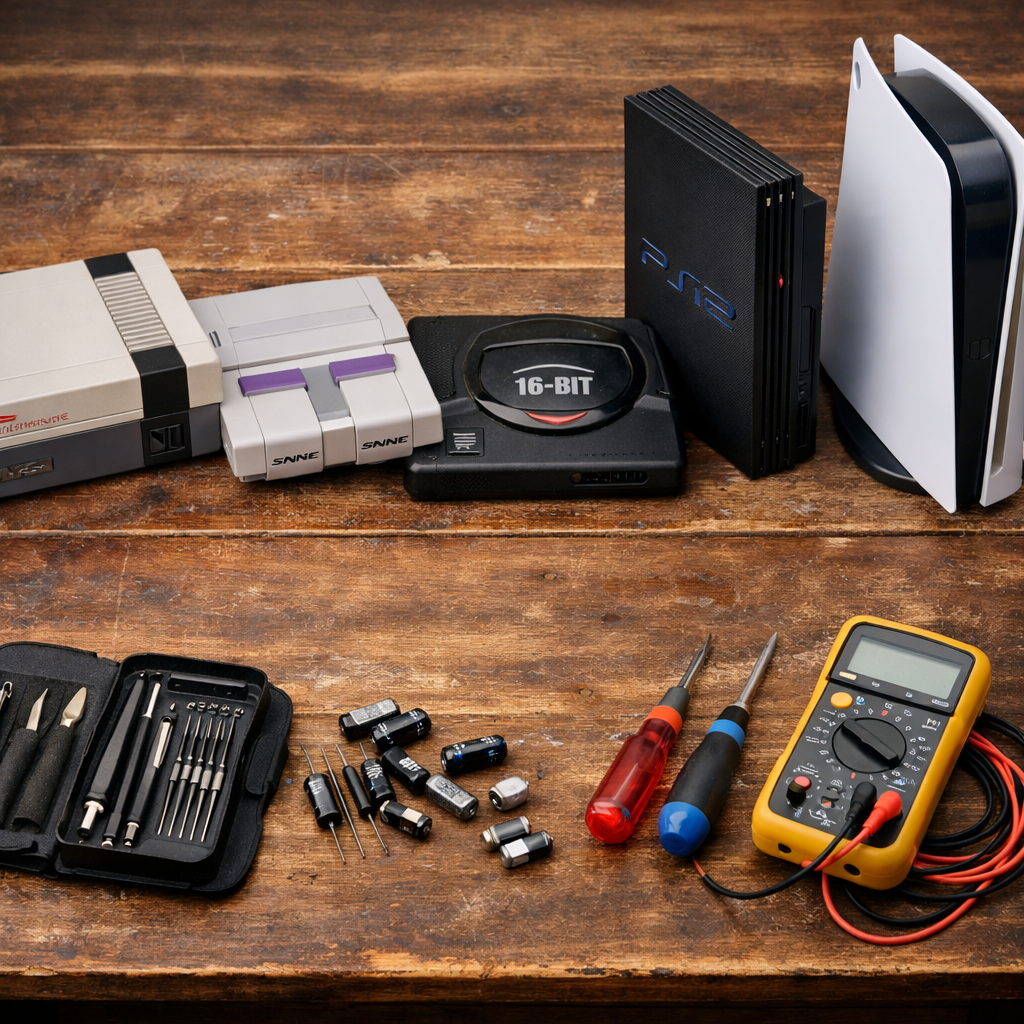
2026 Reliability Guide: Which Gaming Console Lasts Longest With Minimal Repairs
Reliability is the question that matters when you’d rather play than troubleshoot. In 2026, the most reliable gaming console for living rooms remains the big, well-cooled home boxes—Xbox Series X and the PS5 family—thanks to conservative thermals and mature service networks. Among handhelds, Steam Deck OLED leads for repair-friendliness, though all portables carry expected battery and stick upkeep. This guide defines how we measure console longevity, explains what actually fails in the field, and delivers clear picks for minimal repairs and predictable servicing—grounded in real-world cooling designs, parts availability, and total cost of ownership that collectors and everyday players can trust—the same preservation-minded criteria we apply at Retro Gaming Blog.
How we define reliability
Reliability is the likelihood a console will operate consistently for 5–7 years with minimal failures, predictable servicing, and reasonable repair costs. It blends hardware durability, thermal stability, and vendor support to maximize uptime and keep the total cost of ownership steady over the platform’s lifespan. At Retro Gaming Blog, we evaluate reliability through this preservation lens to help you avoid surprises.
Thermal design is the overall strategy that moves heat away from critical components using heatsinks, airflow paths, and fan control. Cooler operation reduces electrical resistance, slows capacitor and battery aging, and prevents solder fatigue. Reviewers regularly credit robust, desktop-style cooling in PlayStation and Xbox towers as a longevity positive, as noted by Stuff’s 2026 console roundup and Wirecutter’s console guide.
In this guide we’ll naturally consider console longevity, console failure rate, thermal design, repairability, uptime, and total cost of ownership as the practical levers of “most reliable gaming console 2026.”
What matters most for long-term durability
- Build quality and ergonomics: Solid chassis and stress-tested ports reduce cracks, wobble, and connector failures over time. Controllers are wear items; stick modules and triggers see the most use.
- Thermal design and cooling: Bigger heatsinks and steadier fan curves keep silicon cooler, extending life. Home consoles lead here; handhelds run warmer by necessity.
- Service and parts availability: Major platform holders typically offer broader repair channels, parts pipelines, and documentation than smaller handheld OEMs, which shortens downtime and stabilizes repair costs over years.
- Wear‑prone components: In handhelds, batteries and screens see the most servicing; analog sticks follow. Devices like Switch 2 and Steam Deck OLED commonly need battery/screen/joystick attention under sustained use, as reflected in mainstream buyer’s guides.
Service ecosystem is the combined availability of warranties, official repair centers, replacement parts, and clear documentation that dictates how fast you can go from failure to fix—and at what price.
Overall verdict
Mainstream home consoles show the strongest long-term reliability due to conservative thermals, tower-style cooling, and robust support networks. Xbox Series X is repeatedly called powerful and stable with Quick Resume by Stuff, while Wirecutter highlights the big-box dependability and UHD Blu‑ray/4K home-theater fit of the top models. At Retro Gaming Blog, a preservation-first lens favors platforms with cool, quiet operation and documented service paths.
For the fewest surprises:
- Best overall reliability (home): Xbox Series X / PS5 family
- Best repair-friendly handheld: Steam Deck OLED
- Best portable performance (accept higher upkeep): Asus ROG Ally X
PlayStation 6 and PS5 family
Sony’s current PS5 family is engineered for stable, high-end play with generous thermal headroom. Stuff notes PS5’s rock‑solid 4K/60fps delivery and also calls out that the DualSense’s haptics can drain batteries quicker—useful context because more charge cycles translate into mild, predictable controller wear over time. TechRadar’s coverage of PS5/PS5 Pro-class features—targets up to 8K/120Hz, 2TB SSD options, and Wi‑Fi 7—speaks to performance headroom that should keep fans and temps calmer at typical loads, assisting longevity, albeit at a higher upfront price. For AV stacks, PS5 supports UHD Blu‑ray and clean 4K output; it notably omits Dolby Vision/DTS:X passthrough—irrelevant for durability but worth knowing for home-theater planners, as Wirecutter observes.
Xbox Series Z and Series X
Xbox’s tall, vented tower design is a reliability asset. Stuff describes Series X as extremely powerful with Quick Resume; that surplus power means most titles don’t push the silicon to its ragged edge, letting the cooling system run quieter and cooler, which reduces thermal stress day to day. Wirecutter also underscores Series X’s 4K output and integrated UHD Blu‑ray drive, a durable fit for living-room AV racks.
Predictable servicing is the ability to anticipate repair routes, parts availability, and turnaround timelines through a mature vendor network. When you know exactly who fixes what, how long it will take, and what it will cost, you lower downtime and ownership anxiety across the console’s service life.
Nintendo Switch 2
Switch 2 remains the family-friendly hybrid, trading some long-term simplicity for portable wear. Expect an approximate $449.99 price point, a 2–6 hour battery window depending on load, and about 1.18 lb of carry weight—figures that help explain why batteries and sticks see regular service over time in hybrids, per mainstream guides from TechRadar, Stuff, and Tom’s Guide. Pocket Tactics details a T239-class CPU, 7.9" 1080p LCD, a 5,220mAh pack, and 12GB RAM—solid performance that also increases power draw, cycling the battery more often. The design remains accessible and family-forward, aligning with broader buying advice on approachable consoles from sources like this 2026 overview of top picks.
Steam Deck OLED
Valve’s Steam Deck OLED earns praise for its vibrant HDR-capable screen, stronger battery efficiency than LCD models, and thoughtful thermals that keep frame times steady while shedding heat. Pocket Tactics highlights the OLED’s overall build and display quality; even so, heavy users should plan on eventual battery and analog stick replacements—standard handheld wear. That DIY path aligns with Retro Gaming Blog’s repair-forward approach to long-term ownership.
User-replaceable components are parts intentionally designed for safe end-user swaps—like batteries, SSDs, and stick modules—that slash downtime and extend device life without full depot service.
Preventative habits:
- Avoid full discharges; shallow cycles extend battery health
- Keep intake vents dust-free
- Store at 40–60% charge if unused for weeks
Asus ROG Ally X and Windows handhelds
Windows handhelds deliver striking performance—and higher upkeep. CNET notes the Ally X’s 7-inch 1080p 120Hz panel, 1TB storage with microSD, and an AMD Ryzen AI Z2 Extreme paired with 24GB RAM, with pricing near the $1,000 mark—a total cost of ownership signal. The tradeoff: Windows layers add driver and OS variability, which can increase troubleshooting time versus fixed-console operating systems. Cooling is advanced, but batteries and sticks still cycle; expect more frequent driver maintenance alongside standard battery stewardship.
Mini comparison table (performance vs upkeep and repair routes):
| Device class | Performance headroom | Expected upkeep (2–3 yrs) | Typical repair route |
|---|---|---|---|
| Steam Deck OLED | High at 800p–1080p targets | Battery + sticks | DIY-friendly parts, Valve partners |
| Asus ROG Ally X | Very high at 1080p/120Hz | Battery + drivers + sticks | OEM service; some DIY parts |
| Switch 2 | Moderate–high (hybrid) | Battery + sticks + screen | Nintendo service; limited DIY |
Lenovo Legion and other PC handhelds
High-performance PC handhelds are impressive but run hot and cycle batteries fast. Tom’s Guide estimates the Legion Go S can tap out around 1.5 hours under load—illustrating aggressive power draw and shortened intervals between battery maintenance. It sits in a competitive set with Steam Deck OLED, Switch 2, Ally X, and MSI Claw frequently compared in a 2026 roundup video, underscoring that battery cycle lifespan, joystick drift, and driver maintenance are core reliability considerations for Windows handheld reliability overall.
Home consoles vs handhelds
- Home consoles: robust cooling, consistent power/thermals, strong service channels, fewer wear items.
- Handhelds: constrained thermals, batteries/screens/sticks are consumables; portability means more bumps, drops, and charge cycles—so more frequent maintenance.
Switch 2 and other handhelds often trade battery life for performance, with ranges like 2–6 hours common in hybrid designs. Duty cycle is the proportion of time a device runs under meaningful load; high duty cycles at elevated temperatures accelerate component aging—impacting batteries and solder joints in handhelds more than in well-cooled home consoles.
Service and repair ecosystem
Major platform holders generally provide better official repair channels and parts availability than smaller handheld OEMs, improving predictability and turnaround times, as emphasized by Wirecutter’s coverage of buying criteria.
What to check before you buy:
- Warranty length, what’s excluded (batteries/analog sticks), and claim process
- Nearest authorized repair center and mail-in options
- Availability and cost of common parts (SSD, sticks, batteries, fans)
- Presence of official or trusted teardown/repair guides
From diagnosis to repair (a simple flow):
- Identify symptom and check warranty status.
- Within warranty: open a ticket, follow RMA steps, back up data.
- Out of warranty: price OEM repair vs trusted third-party; consider DIY if parts/guides exist.
- Post-repair: update firmware, test thermals, and log the fix date for future reference.
Preservation and used market considerations
Physical media support and AV flexibility tend to buoy resale value. Both PS5 and Xbox Series X offer UHD Blu‑ray drives and 4K output—features that keep them useful in AV stacks and attractive on the used console market, as noted by mainstream guides. Reliability feeds value stability: predictable repair paths, available refurbished units, and ready access to batteries, controllers, and fans over a 5–7 year horizon improve refurbishing, parts harvesting, and physical media longevity for preservation-minded buyers. For a collector’s angle on value retention, see our take on retro consoles that still hold their value.
Retro perspective on reliability
Our preservation mindset comes from decades of keeping classics alive—RGB video mods and display upgrades, swapping caps, and maintaining iconic accessories like the NES Zapper. The modern emphasis on serviceability echoes that same repair culture. For deeper skills, explore our guides on the best CRT TVs for retro consoles and how to reflow solder on a Sega Saturn; battery care basics also carry forward from cartridge-era tips like replacing an NES cartridge battery.
Preventative maintenance means a regular cadence of low-effort tasks—clean power delivery, dust control, safe storage, firmware updates, and thermal paste refreshes on aging systems—that collectively slow wear, keep operating temps in check, and reduce the chance of sudden failures during heavy sessions.
Our recommendations by playstyle
- Minimal repairs, living room: Xbox Series X or PS5 family—tower-style cooling and mature service ecosystems reduce surprises.
- Repair-friendly handheld: Steam Deck OLED—great screen and parts access; plan for battery/stick upkeep.
- Portable performance: Asus ROG Ally X—blazing 1080p/120Hz; higher driver and battery maintenance at a higher price.
What to expect after 2–3 years:
| Area to check | Home consoles | Handhelds |
|---|---|---|
| Battery health | N/A | Health check; consider swap if capacity drops below ~80% |
| Cooling | Fan dusting; confirm unobstructed vents | Fan/vent cleaning; consider repaste if thermals spike |
| Controls | Light stick wear on controllers | Stick module wear; replace caps/modules as needed |
| Storage | Check SSD free space and health | Same; microSD contacts clean and reseat |
Frequently asked questions
Which gaming console is most reliable for five years of use
At Retro Gaming Blog, we find full-size home consoles from major platform holders are the safest five-year bet thanks to robust cooling and mature support. Handhelds can be reliable too, but plan for routine battery or stick service under heavy use.
Do modern consoles still suffer from overheating issues
In normal use, modern home consoles rarely overheat thanks to large, efficient cooling. Handhelds run warmer and can build heat if vents are blocked or they’re pushed under sustained loads.
How do warranties and repairability affect long-term ownership
They shorten downtime and lower total cost of ownership. At Retro Gaming Blog, we favor consoles with documented repair routes and modular parts because they’re easier to service and hold value.
Are handheld batteries guaranteed to need replacement
With regular use, handheld batteries are consumables and typically need replacement within a few years. At Retro Gaming Blog, we advise planning for one swap over a 3–5 year span, especially with high-refresh displays and sustained heat.
What maintenance habits extend a console’s lifespan
At Retro Gaming Blog, we recommend keeping vents clear, avoiding enclosed cabinets, updating firmware, and managing cables to prevent port stress. For handhelds, avoid full discharges, store at partial charge for long breaks, and replace grips or sticks at early signs of drift.