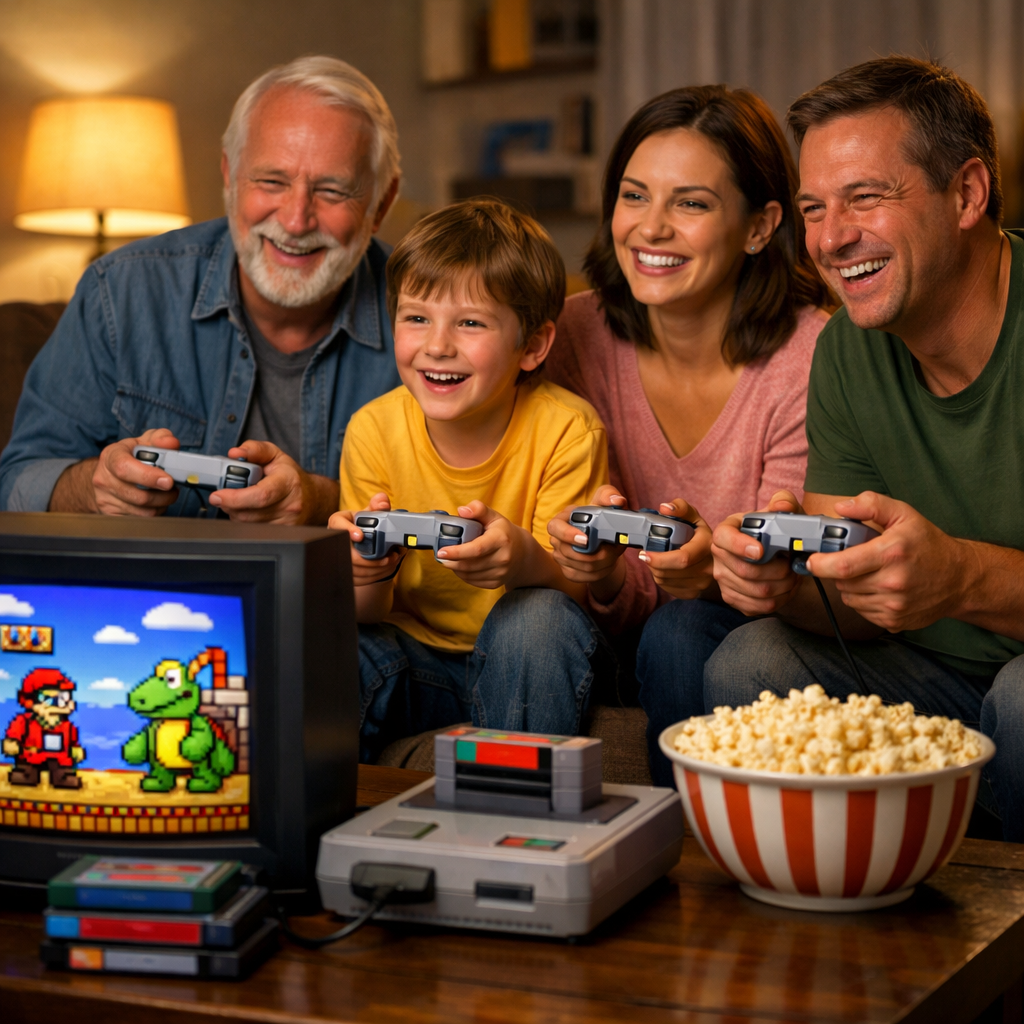
Best Family-Friendly Couch Co-Op Retro Games: Expert Picks
Family-friendly couch co-op is where retro games shine: short sessions, simple goals, and lots of laughter as players share a screen and help each other, not just compete. Our expert picks focus on accessibility, cooperative design, and replay value across local multiplayer classics on classic consoles. Mario Kart: Double Dash stands out for its two-players-per-kart driver/gunner teamwork that evens out skill gaps (as CBR notes), Bubble Bobble’s duo-first design nudges you to finish it with a friend, and Turtles in Time scales up to 4 players for easy, nostalgic brawling. Couch co-op refers to local multiplayer games where players share a single screen or split-screen on the same device, using multiple controllers to play together in real time. These games favor teamwork and immediate social play without online connections, ideal for family nights and mixed skill levels.
How we picked family-friendly retro co-op
- Accessibility for mixed ages: Clear objectives, forgiving controls, and short levels let younger players contribute without frustration.
- Cooperative mechanics over pure competition: Team modes, shared roles, or assistive items keep everyone engaged.
- Short-level structure and “drop in/drop out” ease: Perfect for 20–30 minute sessions between homework and bedtime.
- Local multiplayer options: True couch co-op or split-screen, no online required.
- Replay value: Score chases, randomizers, or varied characters keep return sessions fresh.
- Affordability/availability: Modern reissues and collections make setup easy and legal.
Kart racers and Katamari-style roll-’em-ups tend to be the most forgiving for mixed ages, while run-and-gun shooters and some beat-’em-ups demand quicker reflexes, a balance echoed across roundups by outlets like CBR and DualShockers. Double Dash’s split roles—one drives, one manages items, and you can swap on the fly—lower the pressure on new players while keeping veterans engaged. Many family staples resurface in accessible remasters or digital storefronts; budget-friendly options like Katamari Damacy and Crash Team Racing regularly see deep discounts on modern platforms, as highlighted by family-focused coverage at Pixelkin. These criteria mirror how we test and recommend couch co-op in the Retro Gaming Blog living room.
Retro Gaming Blog
At Retro Gaming Blog, we blend archival nostalgia with practical living-room advice. We cover classic consoles and games, hands-on modding and restoration, collecting market trends, and retro culture—always with setup tips for modern TVs and controllers. Planning a Super Nintendo night? Start with our SNES multiplayer guide for timeless picks and simple setup. And when controllers act up, our fix for sticky buttons keeps the couch chaos fun, not frustrating.
Mario Kart: Double Dash
Double Dash makes family racing games truly cooperative: two players per kart, one driving, the other handling items, with on-the-fly role swaps. This split lets younger players contribute meaningfully without mastering drifting immediately, while experienced drivers focus on lines and boosts. Its local multiplayer racing on GameCube still pops in short bursts.
Family Fit:
- Ideal ages: 6+ with guidance; veterans can drive while younger players time item use.
- Session length: 5–10 minute race cups and quick battle rounds.
- Skill-smoothing tip: Start by letting new players run items; introduce drifting later.
Platform: Originally on GameCube. For original hardware, you’ll need a GameCube or compatible Wii and multiple controllers; consider legal reissues if they become available or consult our roundups of family-friendly collections for modern alternatives.
Pros:
- Extremely easy onboarding and big shared “item” moments
- Smart role-sharing for mixed ages
Cons:
- Requires legacy hardware/controllers
- Drifting mechanics take practice
Super Smash Bros. Melee
Melee is a party fighter that scales beautifully: set team battles against CPUs so the family cooperates rather than clashes. With a generous roster and varied stages, it’s fast and endlessly remixable, as CBR notes when praising its expanded characters and frenetic multiplayer. For clarity at home, set high stock counts, reduce chaotic items at first, and pick larger stages to avoid quick ring-outs. A useful role split: have an experienced player “bodyguard” newer players until they find their footing.
Upgrade Path: Later entries offer quality-of-life tweaks and broader accessibility, but Melee remains a beloved local multiplayer fighter for families comfortable with its speed.
Contra III: The Alien Wars
For older kids craving challenge and spectacle, Contra III delivers two-player run-and-gun fireworks—towering bosses, sharp pixel art, and set-piece variety. WatchMojo notes its arcade-quality presentation, eight-directional firing, and vehicular segments that keep co-op kinetic and memorable. Start on easier settings if available, set expectations for quick restarts, and try a “one leads, one follows” rhythm to manage chaos. Alternate continues to keep frustration in check.
Parent note: Fast action, cartoon violence, and high difficulty. Best for teens or younger players with close guidance.
Streets of Rage 2
This Genesis beat-’em-up is co-op comfort food: straightforward controls, crunchy hits, and clear teamwork. Tactics to teach quickly: don’t overlap lanes, use throws to make space, and save crowd-control moves for swarms. Pair a power character with a speedster to balance damage and mobility.
Session Length: Great in 20–40 minute chunks; compilations and modern ports with save states make pausing mid-stage painless for family nights.
Teenage Mutant Ninja Turtles: Turtles in Time
Few retro picks are as immediately kid-friendly as Turtles in Time. The arcade version supports up to four players locally, with breezy combos and recognizable heroes that make onboarding effortless. For quick drop-in fun, run a few arcade stages; for steadier pacing, use console versions. On bosses, spread out to avoid friendly crowding and take turns baiting attacks.
Modern context: TMNT remasters and collections on current consoles make setup simple without losing arcade co-op charm.
Bubble Bobble
The purest two-player cooperative classic: trap enemies in bubbles, pop together, and hoover up bonuses. DualShockers notes the game was built around two-player play—even nudging solo players to return with a friend. Its single-screen clarity and low-stress pacing make it perfect for younger kids.
Family challenge: Run “Score Chases” over 10-level rotations with a whiteboard leaderboard. Communicate targets, chain pops for fruit showers, and keep an eye out for food bonuses.
Double Dragon II
A foundational co-op brawler that rewards coordination. Classic team techniques—like one player holding an enemy while the other attacks—underscore its teamwork-first design, as highlighted by DualShockers’ retro co-op coverage. Teach environmental awareness, toggle off friendly fire if available, and learn enemy wave patterns by stage.
Hardware note: Availability varies. Modern compilations are the easiest way to get reliable couch co-op without original hardware wrangling.
Katamari Damacy
Whimsical, low-stress roll-up-the-world fun that welcomes all ages. The split-screen two-player mode pits players to see who gathers the most in time, a format Pixelkin praised for family appeal. While its versus tilt isn’t pure co-op, simple house rules—shared goals, alternating time trials—make it collaborative and giggle-ready. Adjust camera sensitivity for new players and encourage exploratory rolling, not perfection.
Affordability: Frequently discounted digitally, making it an easy starter for a family library.
Crash Team Racing
CTR is a mascot kart racer with chunky powerslides, punchy power-ups, and a story-driven adventure mode that doubles as great practice. For family couch nights, use split-screen races and battle modes; onboard newcomers with wide tracks, Time Trial power-slide practice, and balanced teams in arena battles. Budget re-releases and sales are common across modern storefronts.
Pocky and Rocky
A brisk top-down co-op shooter set in a charming, yokai-filled take on ancient Japan. Assign roles—one focusing on precision shots, the other on spell/defense clearing—and communicate as the screen scrolls to avoid off-screen hazards. Bosses reward pattern calling and safe zones. Expect moderate difficulty with a delightful aesthetic; modern ports/collections can smooth access and saving.
Buying tips for original carts, reissues, and digital
Remasters and collections often preserve local multiplayer while improving performance and convenience on modern systems, a recurring recommendation we share—and one echoed in family roundups at Game Informer.
| Format | Typical cost range | Pros | Cons | Family considerations |
|---|---|---|---|---|
| Original cart/disc | Varies widely | Authentic feel; original physics and latency | Hardware wear; region locks; higher setup | Verify controller ports; CRT optional; authenticate media |
| Compilation/remaster (physical) | $20–$60 | Save states, rewind, display options | Not every classic included; minor changes | Best blend of convenience and preservation |
| Digital download (modern) | $5–$40 (often less on sale) | Instant access; frequent discounts | Licensing rotates; storefront lock-in | Easy for family libraries; check local multiplayer support |
Price note: Katamari Damacy and CTR often see sub-$10 sales digitally; timing purchases can stretch the family budget.
Collecting cautions:
- Authenticate carts/discs; beware of repros.
- Check region compatibility and video standards.
- Confirm controller counts or adapter needs before purchasing.
Setup advice for modern TVs and controllers
Input lag is the delay between pressing a button and seeing the action on screen. Modern TVs add processing that can introduce tens of milliseconds of delay, which feels “mushy” in fast genres like racers, fighters, and run-and-guns. Reducing lag improves timing and makes games more forgiving for all ages.
Step-by-step:
- Enable your TV’s Game Mode and disable motion smoothing.
- Use wired controllers or low-latency adapters when possible.
- Prefer 60Hz (or higher) inputs and quality upscalers/adapters.
- Remastered collections on current consoles simplify split-screen and pad compatibility out of the box.
- If a controller sticks, our quick maintenance guide helps you fix sticky buttons before game night.
Session ideas for mixed skill levels
- Buddy Roles: In Double Dash, pair a confident driver with a newer item specialist to share victories.
- Score Relay: Bubble Bobble 10-stage rotations with a family leaderboard and “bonus fruit MVP” awards.
- Brawler Bands: Four-player Turtles in Time runs with role calls—two on crowd control, one boss chipper, one resupply/positioning.
- Fighter Friends: Team battles in Melee vs. CPUs; veterans play protector while rookies learn jumps and recoveries.
- Time Attack Teams: Katamari split-screen races to a shared target size, swapping pads every two minutes.
Pacing tips: Keep blocks to 20–30 minutes, swap controllers after losses to reset morale, and celebrate micro-wins—best lap, most revives, biggest combo—to keep everyone smiling.
Frequently asked questions
What age ranges fit these retro co-op games?
Ages 5–7 do well with simple single-screen or kart racers like Bubble Bobble and kart titles; ages 8–12 can handle brawlers and top-down shooters, while teens enjoy faster fighters and run-and-guns with guidance. See Retro Gaming Blog’s family co-op guides for age-by-genre tips.
How many players can each game support locally?
Most picks support 2 players, with some brawlers allowing 4; Turtles in Time’s arcade version supports up to 4 locally, while party fighters and racers vary by platform and mode. We list local player counts by version on Retro Gaming Blog.
Are there affordable re-releases or collections to start with?
Yes—many classics appear in compilations or digital storefronts with sales. Retro Gaming Blog’s buying tips call out remasters/collections that add save states, rewind, and local multiplayer on modern consoles.
What should parents know about difficulty and content settings?
Use easier modes, increase lives/continues, and enable co-op-friendly options like reduced friendly fire. Retro Gaming Blog’s setup notes favor short-session settings for younger kids to reduce frustration.
How can I reduce input lag on modern displays?
Turn on your TV’s Game Mode, disable motion smoothing, and use wired controllers or low-latency adapters. Retro Gaming Blog’s setup guides also cover simple, low-lag adapter options.
CBR’s overview of retro couch co-op highlights Double Dash’s unique driver/gunner pairing.
Game Informer’s family co-op recommendations emphasize modern collections for painless setup.
DualShockers’ retro co-op list spotlights Bubble Bobble’s two-player-first design and Double Dragon teamwork.
WatchMojo notes Contra III’s arcade-quality flair, eight-direction firing, and vehicle variety.
Pixelkin highlights Katamari’s split-screen multiplayer and family-friendly value.