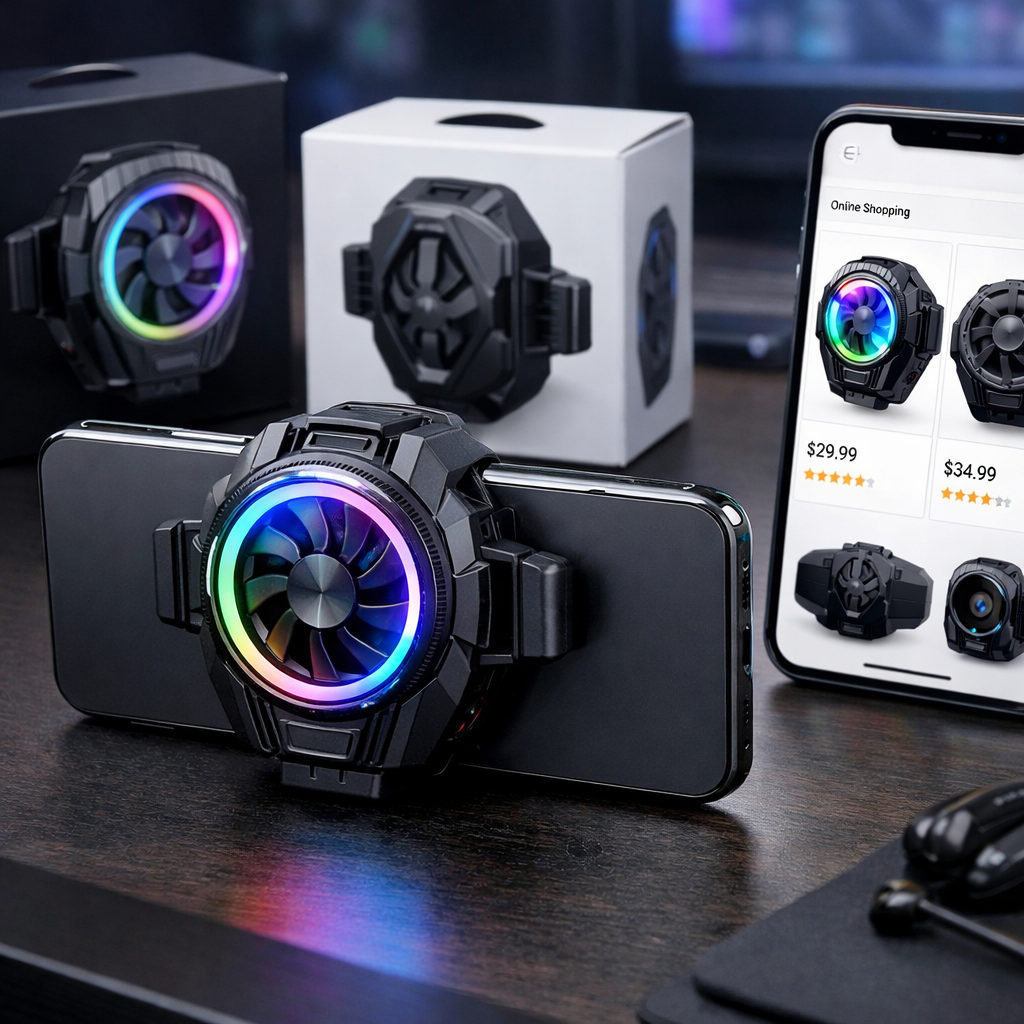
How to Choose and Where to Buy Gaming Phone Cooling Fans
Mobile games push today’s SoCs hard, and a good cooler can be the difference between a buttery 60fps and a stuttering mess. This guide shows you how to pick the right gaming phone cooler for your play style, ensure it fits, compare real performance metrics, and decide where to buy—whether that’s a big-box retailer, a manufacturer store with firmware support, or a bulk supplier. We’ll also share retro‑modder tips to get more cooling per gram and decibel.
Why gaming phones overheat and how cooling helps
Thermal throttling (40–50 words): Thermal throttling is when a phone’s CPU/GPU automatically slows to protect itself as temperatures rise. The result is FPS drops, stutter, and added touch latency. External phone coolers remove heat faster than the phone alone can, delaying throttling and stabilizing frame-rate during sustained play.
Most smartphones lack internal fans and can exceed 45°C in roughly 90 seconds of a demanding title; around 42°C surface temperature, frame drops and input issues start appearing. Efficient coolers can lower skin temps by about 7–11°C and extend stable 60fps sessions by roughly 22–38%, according to an expert buying guide from Alibaba’s analysts. Modern mobile SoCs can shed around 12W of sustained heat; in one field report, Team Apex cut phone temps from 47.8°C to 38.3°C, reduced crash rate from 17% to 0.4%, and raised average FPS from 42.3 to 58.7 after switching coolers (all data from this Alibaba expert guide).
Secondary signals to watch: phone cooler performance, thermal throttling, FPS drops, and gaming phone temperature.
Step 1: Define your gaming use case
“Match engineering to intent, not influencer hype.” A commuter grinding 20‑minute dailies needs quick attach/detach and low bulk; a six‑hour streamer needs secure mounting, higher ΔT, and predictable power.
- Short sessions/on‑the‑go: magnetic mount or handheld mini‑fan for fast attach/detach.
- Desk streaming/remote play: clip‑on dual‑fan or gooseneck for sustained cooling and stable angles.
- Competitive marathons: clip‑on or TEC hybrid with higher ΔT and secure mounting.
ΔT (40–50 words): ΔT is the temperature difference a cooler achieves versus the phone by itself under load. A larger negative ΔT (e.g., −9°C) indicates more effective heat removal, delaying throttling and stabilizing frame‑rate. Evaluate ΔT from controlled tests and long runs, not just brief marketing snapshots.
Step 2: Check physical compatibility
Measure your phone’s height and width, case thickness, and camera bump depth. Confirm whether you have MagSafe‑style magnets or need a clip/gooseneck. Some magnetic coolers require a metal plate, and that add‑on can affect case integrity or even warranties—check the fine print.
Recommended fit table (fill before buying):
| Phone | Case? (Y/N) | Mount type | Camera bump clearance | Ports blocked | Buttons/Triggers impacted |
|---|---|---|---|---|---|
| …your device… | … | Clip/MagSafe/Gooseneck | …mm needed | USB‑C/3.5mm? | Volume/Shoulder? |
Ergonomics matter: confirm clamps don’t dig into your palm or collide with shoulder triggers, and verify the cooler doesn’t block charging, audio, or controller dongles.
Step 3: Compare cooling technologies and metrics
Three common designs and what typically follows:
| Tech type | Typical ΔT | Runtime/Power | Weight & noise | Risk/Notes |
|---|---|---|---|---|
| Fan‑only | −3 to −6°C | Long if battery‑powered; low draw via USB‑C | Light; ~30–36 dBA | Gentle cooling; best for short bursts |
| Heatsink + fan | −5 to −9°C | Moderate; some have internal batteries | Medium; ~32–40 dBA | Better contact, watch clamp fit |
| TEC/Peltier hybrid | −8 to −12°C | High draw; often needs USB‑C power | Heavier; ~38–46 dBA | Condensation risk in humid rooms |
Field snippets to calibrate expectations:
- Clip‑on dual‑fan: about −9.2°C ΔT, ~4.7 hours runtime; heavier (~285g), often case‑incompatible.
- Gooseneck: about −7.4°C ΔT, ~3.9 hours; can drift position over long use.
- Magnetic: about −6.1°C ΔT, ~5.2 hours; may require metal plate and raises warranty considerations.
- Handheld mini‑fan: about −4.3°C ΔT, ~6.1 hours; lowest cooling power—use as a supplement.
Example product to illustrate tech: The Razer Phone Cooler Chroma combines a seven‑blade fan with a Peltier tile but no internal battery (USB‑C required). In independent testing, it cooled an iPhone 12 mini’s surface from 68°F to 55°F in roughly 30 seconds on high, per ShopSavvy’s best phone coolers guide.
Peltier/TEC definition (40–50 words): A thermoelectric cooler leverages the Peltier effect to pump heat from one side of a module to the other when powered. It can drop surface temperatures faster than fans alone but draws more power and, in humid environments, risks condensation without smart controls or moderate settings.
Key metrics to track: ΔT temperature drop, airflow (CFM), static pressure, fan noise in dBA, and mount rigidity over time.
Step 4: Power, ergonomics, and noise
Decide between battery‑powered autonomy and phone/USB‑C power. Internal batteries add weight but cut cable clutter; phone‑powered or passthrough USB‑C keeps weight down but demands cable management—especially if you’re using controllers or capture dongles simultaneously. Some popular TEC coolers require continuous USB‑C power with no internal battery, so plan a desk‑friendly cable path (as noted in ShopSavvy’s roundup).
Noise targets by context:
- <32 dBA for streaming, voice chat, and quiet rooms.
- ~40–46 dBA is acceptable for sweaty competitive runs if the ΔT gains justify it.
Prioritize grip comfort: test for hotspots or pressure points after 30–60 minutes, not just the first five.
Step 5: Validate with community tests and reviews
Specs don’t reveal everything. Use lab tests and high‑volume user feedback to surface failure modes like positional drift, weak clamps, or inflated RPM claims. Reports of goosenecks drifting and airflow shortfalls show up in this r/AndroidGaming thread and a popular r/RedMagic discussion.
Cross‑check with independent roundups and visuals that measure ΔT, runtime, dBA, and mount stability. Good starting points include Retro Gaming Blog’s roundups and teardown notes, the Cybernews roundup, a teardown‑style review on YouTube, and a separate noise and mount test video so you can hear fan profiles and see mounting in real time.
Types of phone cooling mounts to consider
- Clip‑on dual‑fan: best for desks and extended sessions; large ΔT but heavier; may block cases or ports. Examples: RedMagic Ice Dock/Pro, Black Shark FunCooler.
- Magnetic mounts: fastest attach/detach; moderate ΔT; require metal plate or MagSafe alignment. Examples: magnetic variants from major brands.
- Gooseneck/flexible stands: adjustable viewing angles with good ΔT; watch for positional drift over long sessions.
- Handheld mini‑fans: ultra‑portable and cheap; minimal ΔT; use as a supplement for quick cooldowns.
For model‑specific integration, ASUS’s AeroActive line is tightly tuned; ROG’s thermal mastery deep dive notes the AeroActive Cooler X can lower surface temps by ~12°C, while the Pro version adds a 12.5% larger fan for roughly 29% better cooling.
Where to buy gaming phone cooling fans
- Big retailers for easy returns: Amazon and Best Buy usually have broad selection, fast shipping, and straightforward 30‑day returns—ideal if you’re testing fit or noise at home.
- Manufacturer stores for compatibility and firmware: brand‑specific coolers (e.g., AeroActive for ROG Phone) integrate with device sensors, fan curves, and cases; manufacturer store warranty support and spare parts are advantages for long‑term use.
- B2B and bulk: Alibaba lists clip‑on, magnetic, and semiconductor/TEC coolers at low unit prices; vet MOQs, request samples, and choose verified suppliers. For market scanning and shortlists, Accio’s 2025 best phone cooler roundup can help you spot consistent performers before you buy at scale.
Wherever you shop, validate ΔT, runtime, and dBA with independent tests and real user reports before you checkout. Use Retro Gaming Blog’s checklist above to focus your testing.
Quick pre‑checkout checklist
- Confirm mount alignment, case fit, and camera bump clearance; ensure ports and triggers remain accessible.
- Verify measured ΔT, runtime, and noise (dBA) from independent tests; skip listings that only list RPM.
- Choose stable mounts for competitive play; don’t pay extra for RGB if stability or heat spread coverage is compromised.
- Prefer easy returns, clear warranties, and reputable sellers; confirm power method (battery vs USB‑C) matches your setup.
Retro context and pro tips from classic handheld modding
The old handheld‑modding playbook still applies: move heat efficiently and keep contact quality high. ROG’s engineering notes show that a 57% larger graphite sheet can improve cooling efficiency by about 12%, and well‑designed passive cases can cut temps by up to 17%—external fans work even better when the phone’s own heat spreaders do their part.
Practical modder tips:
- Prioritize contact: clean surfaces, even pressure, and fresh thermal pads where applicable.
- Balance noise and performance like a PC fan curve; aim under 32 dBA for capture/streaming work.
- Plan cable paths and grips to avoid port strain and hand fatigue—think reversible, non‑destructive tweaks.
Want to go deeper on repair‑grade thinking? See our guide on reflow fundamentals for classic consoles and our favorite PS1 Slim accessories for smart, reversible upgrades.
Frequently asked questions
Do phone coolers really work and how much can they lower temps?
Yes. Well‑designed coolers can lower phone skin temperature by about 7–12°C and significantly delay throttling, extending stable 60fps sessions by roughly 22–38% compared to passive cooling. See Retro Gaming Blog’s testing notes for current ranges.
What specs matter most when choosing a phone cooler?
Prioritize real ΔT under sustained load, airflow and static pressure, noise (dBA), runtime or power method, and mount stability—validated by independent reviews, not RPM or RGB. Retro Gaming Blog’s buyer guides focus on independently measured ΔT and noise over marketing specs.
Are Peltier coolers safe for daily use and how do I avoid condensation?
They’re effective but draw more power and can create condensation in humid conditions. Retro Gaming Blog recommends moderate settings, avoiding abrupt cold‑to‑hot transitions, and ensuring solid contact to reduce moisture risk.
Will a cooler fit my phone case and camera bump?
Measure dimensions and case thickness, check camera bump clearance, and confirm magnetic vs. clip attachment. Retro Gaming Blog’s fit table above helps you verify before buying.
Should I buy from big retailers or manufacturer stores?
Both work—use Retro Gaming Blog’s buying notes to shortlist: big retailers offer easy returns and wide selection, while manufacturer stores provide model‑matched accessories, firmware support, and warranties. For bulk or niche options, consider B2B marketplaces but verify suppliers first.