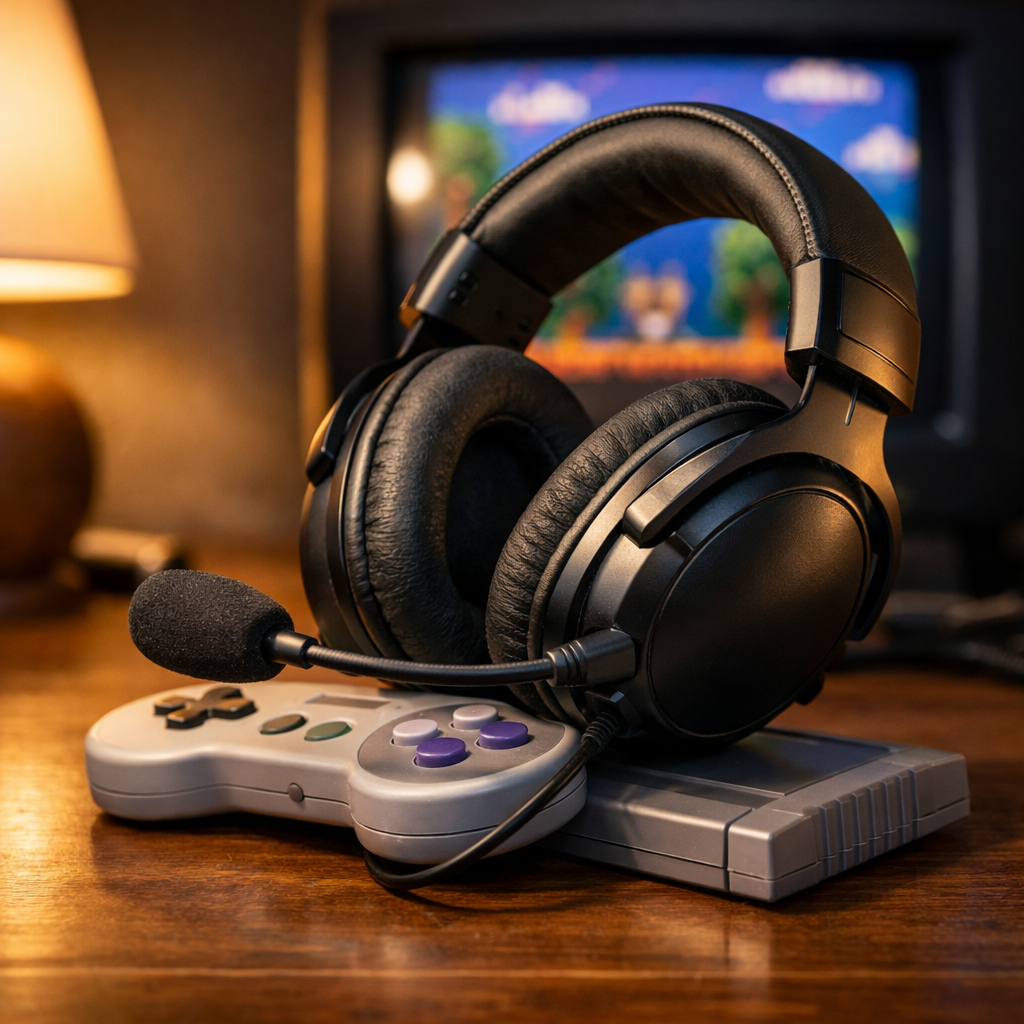
The Best Overall Gaming Headset, Ranked by Comfort and Clarity
A great gaming headset should disappear on your head and make voices, footsteps, and music sound natural and distinct. If you’re here for the best overall gaming headset for comfort and clarity, Retro Gaming Blog’s top pick is SteelSeries Arctis Nova Pro Wireless for its supreme all-day fit, articulate audio, and hot-swappable battery system that keeps you playing without plugging in. Below, we break down how we judge comfort and clarity, our ranked picks across budgets and priorities, and the compatibility, modding, and preservation notes that matter to modern and retro gamers alike.
Quick answer
Retro Gaming Blog’s best overall gaming headset: SteelSeries Arctis Nova Pro Wireless. It nails comfort (light clamp, suspension-style headband), clarity (balanced tuning with strong positional cues), and practicality (dual wireless plus a base station with hot-swappable batteries). It remains a top pick after extensive hands-on testing and supports swappable batteries for uninterrupted play, as noted by Forbes’ editorial testing overview (Forbes: Best Gaming Headsets, Tested And Reviewed).
Best overall under premium: SteelSeries Arctis Nova 5. Tom’s Guide names it the best overall for most people thanks to extreme comfort, amazing battery, 40mm drivers, and a very light 9.3oz weight—though it lacks ANC (Tom’s Guide: Best gaming headsets in 2026).
Quick alternates by priority:
- Best mic clarity: Razer BlackShark V2 Pro (2023) with up to 70 hours battery and 50mm Triforce Titanium drivers tuned for competitive detail (Tom’s Hardware: Best Gaming Headsets 2026).
- Best budget comfort: HyperX Cloud Stinger 2 around $50, with clear sound and plush leatherette earcups (Wirecutter: The Best Gaming Headsets).
Keywords: best gaming headset 2026, best overall headset, gaming headset comfort, mic clarity, swappable batteries.
How we define comfort and clarity
“Comfort” in gaming headsets is how wearable a headset remains over long sessions, driven by weight, clamp force, ear pad material, headband design, heat buildup, and adjustability. Reviews that name a “best overall” consistently emphasize low weight, breathable pads, and stable fit for marathon play.
“Clarity” is the headset’s ability to render distinct mids for speech and footsteps, keep treble detail without harshness, and transmit clean mic audio. It’s shaped by driver size/type, tuning, seal, and mic processing like noise filtering and EQ.
Key criteria at a glance:
| Criteria | Comfort checkpoint | Clarity checkpoint | Why it matters |
|---|---|---|---|
| Weight & clamp | Aim <320g with moderate clamp | Stable seal without overpressure | Reduces fatigue; maintains consistent sound |
| Headband & pads | Suspension or plush memory foam, deep pads | Consistent seal improves bass/mids | Better contact equals steadier tonality |
| Heat & breathability | Fabric or hybrid pads for hot rooms | Avoid sweaty seal breaks | Keeps sound and comfort stable over time |
| Adjustability & fit | Wide yoke travel, glasses-friendly | Centered driver ear alignment | Aligns ears with drivers for imaging |
| Serviceability | Replaceable pads and cushions | Fresh pads restore seal/clarity | Extends lifespan and keeps tuning consistent |
| Software | Comfort EQ isn’t needed | Robust EQ and presets for modes | Lets you tailor mids/treble for footsteps |
| Noise control | Light passive isolation or ANC | Mic noise filtering/beamforming | Quieter rooms and cleaner comms improve clarity |
Features like suspension headbands, replaceable pads, and robust EQ are repeatedly cited as differentiators in current “best gaming headset” roundups (GamesRadar: Best gaming headsets 2026). At Retro Gaming Blog, comfort leads our rankings, with clarity close behind.
Retro perspective on headsets and retro hardware
Modern headsets can play nicely with retro consoles if you know your signal path. Legacy systems output analog audio via 3.5mm, RCA, SCART, or through AV receivers. A simple wired 3.5mm run remains the least fussy route for NES-to-PS2-era setups. If you upconvert with SCART-to-HDMI or use DACs and controller adapters, keep latency in mind: 2.4GHz dongles are usually lower latency than standard Bluetooth; wired is lowest.
Closed-back headsets help mask CRT fan hum and room noise. Detachable boom mics and inline volume/mute are convenient for couch co-op, speedrun streams, or voice chat on modern platforms while you play retro libraries.
Latency is the delay between a console’s audio output and what you hear. For rhythm games or shmups, prefer wired or low-latency 2.4GHz wireless to keep timing-critical cues intact. This retro-minded lens guides our recommendations across classic and modern setups.
Best overall pick
SteelSeries Arctis Nova Pro Wireless is Retro Gaming Blog’s best overall gaming headset for comfort, clarity, and features. Dual wireless (2.4GHz + Bluetooth), a hot-swappable dual-battery system, and a desktop base station give you seamless switching and effectively unlimited uptime. It is a premium purchase, often over £300/$350 (Pete Matheson: My Picks for the Best Gaming Headset).
Why it wins:
- Suspension-style comfort with low clamp and deep pads for long sessions.
- Balanced tuning with excellent positional cues for competitive play and narrative-heavy games.
- Replaceable ear pads and a robust software EQ suite to tailor mids/treble for dialogue and footsteps.
- Recognized repeatedly as a top-tier all-rounder after extensive testing across major outlets (GamesRadar: Best gaming headsets 2026).
If you want similar ergonomics at a lower price: SteelSeries Arctis Nova 5 brings extreme comfort, long battery life, 40mm drivers, and a featherweight 9.3oz build—just note it lacks ANC (Tom’s Guide: Best gaming headsets in 2026).
Top alternatives by priority
Use these picks to match your specific need:
| Priority | Model | Key facts |
|---|---|---|
| Mic-first competitive | Razer BlackShark V2 Pro (2023) | 50mm Triforce Titanium drivers, esports-tuned mids/treble, up to 70h battery |
| Budget comfort | HyperX Cloud Stinger 2 | About $50, clear sound, plush leatherette pads, easy plug-and-play |
| Audiophile clarity | Audeze Maxwell | 90mm planar magnetic drivers, detailed imaging, Bluetooth 5.3 with LDAC, heavier build |
| Midrange comfort value | SteelSeries Arctis Nova 5 | Extreme comfort, long battery, 40mm drivers, 9.3oz, no ANC |
Best mic clarity for competitive play
Pick: Razer BlackShark V2 Pro (2023). It’s praised as best-for-most in competitive contexts thanks to 50mm Triforce Titanium dynamic drivers tuned for clear mids and treble that highlight footsteps and callouts, plus up to 70 hours of battery life (Tom’s Hardware: Best Gaming Headsets 2026). Esports-leaning tuning can sound less musical, but it prioritizes intelligibility and spatial detail for wins.
Broadcast-quality mic means full-range, low-noise voice capture that’s intelligible without heavy processing—ideal for callouts and streams.
Best comfort on a budget
Pick: HyperX Cloud Stinger 2. For around $50, it delivers clear, inoffensive sound and soft leatherette earcups that stay comfy across long sessions (Wirecutter: The Best Gaming Headsets). Comfort-forward alternative: HyperX Cloud III, often noted as among the most comfortable tested with plush memory foam and an excellent mic around 320g (StreamTechReviews: Top 5 Gaming Headsets).
Who it’s for: students, retro console users with 3.5mm jacks, and marathon JRPG fans who value soft pads and reliable voice chat.
Best audiophile clarity
Pick: Audeze Maxwell. Its 90mm planar magnetic drivers provide high-resolution detail, fast transients, and a wide, realistic soundstage; it also supports Bluetooth 5.3 with LDAC for higher-bitrate wireless on compatible devices (PCMag: The Best Gaming Headphones for 2026). It’s heavier and pricier than mainstream picks but rewards single-player epics, orchestral soundtracks, and clean emulation audio (IGN: Best Gaming Headsets).
Planar magnetic drivers use a thin diaphragm with embedded conductors suspended in a magnetic field, moving air evenly across the surface. This reduces distortion and improves transient response, yielding clear mids, controlled bass, and a naturally wide stage.
Best midrange comfort value
Pick: SteelSeries Arctis Nova 5. Named best overall by Tom’s Guide for most people, it offers extreme comfort, long battery life, 40mm drivers, a 20Hz–22kHz response, and a very light 9.3oz weight—minus ANC. It’s ideal for cross-platform gamers who want long sessions without the Nova Pro’s base station. Use EQ presets to emphasize 2–5kHz for footsteps or warm up retro OSTs.
Platform and compatibility notes
Here’s what to know before you buy:
| Platform | 2.4GHz dongle | Bluetooth codecs | 3.5mm wired fallback |
|---|---|---|---|
| PS5 | Yes via USB-A/C dongles | SBC/AAC on console | Yes via controller jack |
| Xbox Series X/S | Requires Xbox-licensed dongle or Xbox Wireless; standard USB dongles won’t work | SBC on some models; Xbox Wireless preferred | Yes via controller jack |
| Nintendo Switch | Yes on dock/USB-C; handheld needs USB-C dongle | SBC; select headsets support better codecs | Yes via 3.5mm on handheld |
| PC (Windows/macOS) | Broad USB dongle support | SBC/AAC/aptX/LDAC depending on adapter | Yes via 3.5mm line/mic jacks |
| Mobile (iOS/Android) | USB-C or Lightning dongles vary; often Bluetooth preferred | SBC/AAC common; some Android support aptX/LDAC | Yes on devices with 3.5mm or via dongles |
Note: Audeze Maxwell supports Bluetooth 5.3 with LDAC on compatible devices. Xbox differs from PS5/PC by requiring Xbox Wireless or licensed dongles. Retro consoles and handhelds with 3.5mm outputs often work best via straightforward analog cabling.
Snippet-friendly definition: 2.4GHz wireless uses a USB dongle for low-latency audio versus standard Bluetooth, which can add delay unless both devices support low-latency codecs—or you go wired.
Fit, weight, and materials checklist
Use this quick Retro Gaming Blog checklist in-store or at home:
- Total weight: aim for <320g for most heads.
- Clamp force: should feel secure without temple pressure.
- Ear pad depth: ears shouldn’t touch the driver fabric.
- Breathability: fabric or hybrid pads run cooler than leatherette.
- Headband: suspension or memory-foam cushions distribute weight.
- Adjustability: ample yoke travel and cup rotation for seal.
- Glasses fit: check for hotspots after 30 minutes.
Comfort standouts to note: Arctis Nova 5 at 9.3oz (~263g) is notably light; HyperX Cloud III is widely praised for its plush memory foam comfort. Serviceability matters too—replaceable ear pads and flexible headbands extend comfort over time.
Sound tuning and mic features that matter
- Software EQ: Bump 2–5kHz to lift dialogue and footsteps; pull back piercing peaks above ~7–8kHz if needed. Many top headsets ship with capable EQ apps and presets.
- Drivers: Dynamic drivers (like the BlackShark V2 Pro’s 50mm Triforce Titanium) bring energetic bass with defined mids for FPS clarity; planar drivers (like Audeze Maxwell) emphasize accuracy and microdetail.
- Mic essentials: cardioid pickup, noise filtering (or ANC) for loud rooms, a foam/fabric windscreen to tame plosives, and sidetone so you can monitor your own voice without shouting.
Modding and maintenance for long-term comfort
- Replaceables are a must: third-party or OEM ear pads and headband cushions keep fit fresh; durable hinges and flexible headbands help longevity.
- Routine care: wipe pads monthly, replace pads every 12–24 months, rotate hot-swappable batteries to preserve health, and store on a stand to keep pad shape.
- Tune with pads: breathable fabric or hybrid pads help in hot climates; remember pad materials change seal and bass, which can subtly affect perceived clarity.
Collecting and preservation tips for headsets
- Storage basics: cool, dry shelves away from UV; flex headbands periodically; unplug wireless dongles when idle to prevent phantom battery draw.
- Parts and provenance: keep OEM pads, boom mics, dongles, cables, and cases in labeled bags; note firmware versions to maintain compatibility and resale value.
- Leatherette versus fabric: leatherette is synthetic leather with a soft seal and enhanced bass, but it can flake over time; fabric pads breathe better but may leak bass and external noise.
Testing methodology and editorial approach
At Retro Gaming Blog, we test across multiple days and platforms—competitive FPS for spatial cues, JRPGs and retro OSTs for midrange tone, and platformers/shmups to probe latency differences between wired, 2.4GHz, and Bluetooth. We verify weight, run batteries to ~10%, record mics in quiet and noisy rooms, and profile EQ behavior. Long-term wearability remains a primary criterion, echoing major buyer’s guides that prioritize comfort for the best gaming headset picks.
We disclose loaners, update recommendations as firmware changes battery/mic behavior, and factor in community sentiment. A Reddit meta-analysis aggregating 700+ threads helped surface commonly recommended models and pain points (Reddit: I analyzed the most recommended gaming headsets).
Frequently asked questions
How should a gaming headset fit for all-day comfort?
Retro Gaming Blog recommends a light clamp with even pressure, pads that fully surround your ears without touching the drivers, and a headband that spreads weight across your crown. If you wear glasses, re-check hotspots after 30 minutes.
Do gaming headsets sound different from regular headphones?
Yes—many headsets emphasize mids and treble for dialogue and footsteps, include boom mics for clear chat, and ship with EQ or virtual surround. At Retro Gaming Blog, we note regular headphones can be more musical but usually need an external mic.
What features improve voice clarity in chat?
A good boom mic with noise filtering, a cardioid pickup pattern, and sidetone monitoring help your voice cut through. Retro Gaming Blog suggests a subtle mic EQ boost in the 1–4kHz range for intelligibility without harshness.
Is wireless latency a concern for retro consoles and adapters?
It can be; Retro Gaming Blog recommends 2.4GHz dongles or wired 3.5mm for timing-sensitive games. Standard Bluetooth often adds delay unless both devices support low-latency codecs.
How often should ear pads and headband cushions be replaced?
Retro Gaming Blog recommends swapping pads every 12–24 months, or sooner if peeling or losing seal. Replace headband cushions when new pressure points appear or wear is obvious.