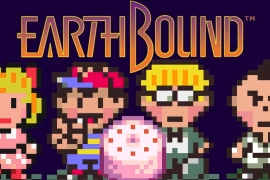
EarthBound wasn’t a game I picked up because it was popular. In fact, when I first came across it, I was drawn to the strange clay-model box art and the surreal screenshots in a gaming magazine. It didn’t look like any other RPG I’d seen. There were no dragons, no medieval knights, no swords of destiny. Instead, it offered psychic kids, aliens, a buzzing bee from the future, and a villain that genuinely made my skin crawl. And somehow, all of that worked together to form one of the most unforgettable gaming experiences I’ve ever had.
Exploring what made EarthBound a cult classic takes more than just admiring its quirky exterior. There’s something deeper in the game’s DNA, something bold, bizarre, and profoundly emotional. It broke the mold and never looked back. While it may not have hit mainstream success during its original release, EarthBound grew into an underground phenomenon that’s now cherished by gamers worldwide.
The Setting Was Anything but Traditional
Most RPGs at the time transported players to fantasy realms filled with wizards, castles, and ancient legends. EarthBound, on the other hand, was unapologetically modern. Set in the fictional land of Eagleland, a satirical spin on American culture, it presented a world of baseball bats, ATMs, arcades, and shopping malls.
The familiarity of the setting made every bizarre moment even more impactful. You’d find yourself battling possessed traffic signs, mushrooms that sprouted on your head, or angry hippies causing chaos in the suburbs. Everything about the world felt like a fever dream stitched together from childhood memories, television shows, and playground rumors.
I didn’t need to imagine being a fantasy warrior. I was a kid in sneakers fighting evil with a yo-yo and PSI powers. That grounded yet surreal combination defined what made EarthBound a cult classic.
Humor That Didn’t Talk Down
EarthBound didn’t take itself too seriously, and that was part of its genius. The humor was dry, offbeat, and often poked fun at RPG tropes. One moment you’d be talking to a sign that gave bad advice, and the next you’d be wandering into a town obsessed with blue paint and totalitarian slogans.
Even the enemies felt like punchlines. You weren’t fighting demons or monsters, you were up against “Unassuming Local Guys,” “Cranky Ladies,” and “Annoying Old Party Men.” Yet, behind the light-hearted presentation was razor-sharp writing that hinted at deeper themes.
The game’s ability to switch between absurdity and seriousness without ever feeling forced was something rare. It’s that unique tone, so full of self-awareness and sincerity, that really got under my skin and made the story stick with me.
Subverting the Hero’s Journey
EarthBound didn’t just follow the hero’s journey, it rewrote it. You start the game not by waking up in a village, but in a small town suburb when a meteor crashes into the hillside. The call to adventure is delivered not by a wise old sage, but a bee from ten years in the future named Buzz-Buzz. And instead of being chosen by destiny to wield a magical artifact, you’re told to check eight “Your Sanctuary” locations to discover your inner power.
What made EarthBound a cult classic wasn’t just that it was weird, it was how it used that weirdness to flip expectations. You don’t save the world with brute strength. You win by praying. You rely on friendship, empathy, and self-sacrifice. The game dared to inject vulnerability into a genre known for stoic heroes and flashy battles.
I was floored by how untraditional the finale was. The final boss, Giygas, is a disturbing entity that can barely be comprehended, let alone defeated in a conventional way. That kind of emotional storytelling wasn’t common in RPGs of the era, and it changed how I viewed games forever.
A Soundtrack Like No Other
The music in EarthBound is an experience all its own. From cheerful town themes to unsettling dungeon music, the soundtrack blended rock, jazz, ambient noise, and psychedelic tones in ways I hadn’t heard in a game before. It felt experimental, almost avant-garde at times, and that fit the game’s mood perfectly.
Every major area had a theme that set the emotional tone, but the real standout was how the battle music adapted depending on the enemy. Some songs were playful, others anxious, and a few were downright creepy. That variety kept me constantly engaged with the world and added emotional weight to even the simplest encounters.
Music is often an overlooked aspect in discussions about what made EarthBound a cult classic, but for me, the soundtrack is part of why the game’s world feels alive and unforgettable.
A Story That Grew With You
On the surface, EarthBound is a fun adventure about kids saving the world. But beneath that surface lies a much more mature and thought-provoking story. As I moved through the game, it became clear that the narrative was a reflection on growing up, facing fears, and coming to terms with the complexities of life.
You start in a safe, familiar town and gradually venture into places that are darker, stranger, and more emotionally charged. Each new location represents a different stage of emotional growth. Ness’s internal journey, especially the dreamlike sequence in Magicant, forced me to think about my own childhood and identity in ways I never expected from a pixelated RPG.
What made EarthBound a cult classic is that it resonated differently with everyone. For younger players, it was goofy and cool. For older players, it was nostalgic and introspective. That multi-layered experience ensured that players kept coming back to it, and sharing it with others.
The Legacy of Fan Dedication
EarthBound didn’t sell well in the West when it launched. Its marketing was strange (the “this game stinks” campaign was memorable for all the wrong reasons), and the visuals looked outdated next to its SNES peers. But something about the game lingered in the hearts of those who played it.
Years later, a vibrant fanbase grew around the title. Websites like Starmen.net kept the flame alive with fan art, ROM hacks, and even petitions for re-releases. Some fans even created full-length fan games like Mother 4, continuing the legacy on their own terms.
Nintendo eventually noticed. EarthBound finally received a digital re-release on the Wii U and later the Switch. That long wait only added to the mystique. The game’s resurgence was driven entirely by passion, word of mouth, and community love, key ingredients in what made EarthBound a cult classic.
Visual Simplicity That Aged Gracefully
Compared to other SNES RPGs like Final Fantasy VI or Chrono Trigger, EarthBound’s graphics were simpler. But that simplicity is exactly why the game still looks so charming today. The bright color palette, expressive sprites, and whimsical environments gave the game a timeless feel.
The visuals never tried to be realistic. They aimed for a cartoonish, childlike aesthetic that matched the game’s tone and humor. Whether you were exploring the desert town of Dusty Dunes or the weirdly futuristic Fourside, every place felt distinct.
The game’s UI was also clean and accessible. Menus were snappy, battles were quick, and status effects were clearly communicated. It stripped away the clutter that often bogs down older RPGs, making it incredibly replayable even now.
A Battle System That Encouraged Quick Thinking
EarthBound’s rolling HP meter might be one of its most ingenious mechanics. Instead of instantly losing all HP when hit, your health rolled down like an odometer. If you acted quickly after taking a mortal blow, you could heal before the counter hit zero and prevent death.
This small tweak added an adrenaline-pumping element to battles. It wasn’t just about choosing the right attack, it was about timing, reflexes, and knowing when to heal or run. The system made even random encounters feel dynamic.
Couple that with PSI powers, unique status effects (getting homesick was a personal favorite), and offbeat enemy types, and the combat felt like its own quirky playground. It didn’t have the complexity of later RPGs, but it didn’t need to. It had personality.
More Than a Game, A Cultural Moment
For those of us who played EarthBound and fell in love with it, it became more than a game. It became a symbol of what video games could be, funny, moving, subversive, and deeply human. I’ve had conversations with strangers, years after finishing the game, who instantly light up at the mention of Ness or Mr. Saturn.
When Ness appeared in Super Smash Bros., it felt like a quiet nod to the fans who never gave up on the game. Every time I see someone wearing a striped shirt and a red cap, I wonder if they’ve been on the same journey.
What made EarthBound a cult classic was how it slipped under the radar and planted roots in the hearts of players who didn’t even know they were looking for something different. It spoke to the weird kid, the creative kid, the nostalgic adult, and the gamer tired of the usual tropes. It was lightning in a bottle.
The Future of EarthBound’s Legacy
EarthBound’s influence continues to ripple through gaming today. Indie hits like Undertale, Lisa: The Painful, and Omori clearly draw inspiration from its mix of humor, emotional storytelling, and unconventional mechanics. Its DNA is all over today’s most innovative narrative-driven games.
Whether Nintendo ever gives us a true sequel or full remake is unknown. But in a way, it doesn’t need to. EarthBound already achieved something most games never do, it became eternal in the minds of its fans.
When I think about what made EarthBound a cult classic, I realize it wasn’t just the weird humor or the trippy enemies. It was how it trusted players to accept the strange, to reflect on their own memories, and to see video games not just as entertainment, but as art.
Final Thoughts
EarthBound didn’t fit in when it was released, and that’s exactly why it has endured. It was funny, heartfelt, bizarre, and deeply personal. It took risks that didn’t make sense on paper, and those risks are what gave it lasting power.
What made EarthBound a cult classic was the perfect blend of storytelling, style, music, humor, and soul. It captured something real in a world made of pixels and dialogue boxes. And for everyone who gave it a chance, it became a part of who they were as gamers, and maybe even as people.