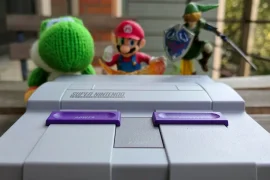
The launch of the Super Nintendo Entertainment System in 1991 wasn’t just another product release, it was a cultural lightning strike. Anyone plugged into the video game scene back then could feel it: something huge was happening. The SNES didn’t just show up quietly on shelves. It landed with an unforgettable impact that echoed through homes, arcades, and playgrounds. What made the 1991 SNES launch so memorable wasn’t one single factor, but a perfect storm of timing, technology, marketing, and raw nostalgia that still burns brightly today.
The Shift in the Console Wars
By the early ’90s, Nintendo had already proven itself a dominant force with the NES. But by 1991, Sega had clawed its way into the spotlight with the Genesis, tempting gamers with faster gameplay, sleek graphics, and a slightly edgier image. The rivalry was heating up. That tension made the SNES release feel like a high-stakes move in a console war where every decision mattered.
What made the 1991 SNES launch so memorable for me, and for many others, was how clearly Nintendo came out swinging. This wasn’t just an upgrade. It felt like an entirely new era of gaming. The 16-bit jump, the Mode 7 graphics, the refined controller, all of it sent a clear message: Nintendo wasn’t backing down.
A Launch Lineup That Still Holds Weight
Let’s talk about the games. A console is only as strong as its launch titles, and Nintendo seemed to know that. Packaged with the SNES came Super Mario World, a title that didn’t just introduce players to a new generation of Mario but also showcased what the new hardware could do. That overworld map, those colorful sprites, the branching paths, it all felt bigger and better without losing that classic Mario charm.
But it wasn’t just Mario. Other titles like F-Zero and Pilotwings made full use of the new Mode 7 graphics engine, delivering pseudo-3D effects that felt like sorcery back then. Even if you were loyal to the NES, these games made you pause and reconsider. They had weight. They had ambition. They dared you to imagine what the future of gaming could look like.
What made the 1991 SNES launch so memorable was that it wasn’t just about nostalgia or loyalty, it was about awe. Each game offered a new kind of experience. You didn’t have to squint to see the difference. It was right there on the screen, loud and clear.
The Power of the SNES Controller
One thing I didn’t appreciate at the time, but absolutely do now, is just how much the SNES controller influenced gaming. The D-pad was tight and responsive, and those extra shoulder buttons (L and R) felt like a revelation. They added depth to gameplay mechanics, especially in fighting games and shooters. And with four face buttons instead of two, developers had more freedom to build intricate control schemes.
It might not sound glamorous, but what made the 1991 SNES launch so memorable had a lot to do with this controller. It became the standard. It redefined how consoles were supposed to feel in your hands. Holding an SNES controller felt natural, like it was meant to be there. And everything that came after, from the PlayStation to the Xbox, borrowed something from its layout.
Marketing Magic and the Power of Hype
Nintendo didn’t just roll the SNES into stores quietly. They unleashed a marketing campaign that burned itself into our brains. Ads with taglines like “Now you’re playing with power, SUPER power” blasted across TV screens and magazines. It was bold. It was loud. It was effective.
That era was also the golden age of game magazines, Nintendo Power, GamePro, Electronic Gaming Monthly. Previews and screenshots teased us month after month, stoking anticipation until it was unbearable. Kids saved their allowances. Parents braced for the holiday season rush. Game stores had waiting lists. It was a fever pitch.
What made the 1991 SNES launch so memorable was how much it felt like an event. You didn’t just stumble into a store and pick one up on a whim. You talked about it. You daydreamed about it. You watched TV commercials on loop just to catch another glimpse of those sweet Mode 7 graphics.
Graphics That Redefined Home Gaming
I remember walking into a friend’s house, hearing the Super Mario World theme playing from the living room, and being completely floored by what I saw. The colors popped in a way the NES never could. The animations were smoother, more expressive. Characters had depth and personality. Backgrounds scrolled in layers, giving a sense of space that made every level feel more alive.
The SNES didn’t just introduce better visuals, it introduced a style. There was a softness to the pixels, a richness to the palette, and a polish to the animation that made everything feel more cohesive and immersive. It wasn’t flashy for the sake of being flashy. It felt intentional, crafted with care.
And let’s not forget about the audio. The SNES’s sound chip, developed by Sony of all companies, could produce layered, atmospheric soundtracks that pulled you into the game’s world. Titles like ActRaiser and Final Fantasy II (IV) proved how emotionally powerful music could be on a console. The orchestral tones, the echoing effects, it all felt cinematic.
The Arcade Experience at Home
In 1991, the arcade was still king. Games like Street Fighter II, Final Fight, and Mortal Kombat dominated coin-op machines around the country. But with the SNES, that experience was finally inching its way into living rooms.
The SNES ports of arcade games may not have been perfect, but they were impressive. You could fire up Final Fight or Gradius III and feel like you were bringing a piece of the arcade home. It meant fewer quarters, fewer long waits for your turn, and more late-night sessions with your friends battling through pixelated chaos.
What made the 1991 SNES launch so memorable was this sense of accessibility. For the first time, you didn’t have to leave the house to get a taste of that high-end gaming experience. The lines between arcade and console were blurring, and the SNES was right at the center of that transition.
Nintendo’s Legacy and Fan Loyalty
By the time the SNES dropped in North America, Nintendo had earned the trust of millions. Kids grew up on Super Mario Bros., The Legend of Zelda, and Metroid. There was a built-in sense of loyalty and expectation. Nintendo didn’t have to convince us to care, we already did.
But that trust wasn’t blind. Expectations were sky-high. If Nintendo had stumbled, the SNES could’ve flopped. Instead, they delivered a machine that not only matched our dreams, it pushed past them.
What made the 1991 SNES launch so memorable wasn’t just what Nintendo promised. It was the fact that they delivered. The console wasn’t a disappointment. It wasn’t a minor upgrade. It was a declaration that Nintendo understood what we wanted before we even knew how to ask for it.
Neighborhood Rivalries and Trading Tips
There’s also the social side of it. Back then, gaming wasn’t as solitary or online as it is today. It was local. You played with siblings, with neighborhood kids, with school friends. You passed around controllers, traded games, argued over secret exits in Super Mario World, or how to unlock certain moves in Street Fighter II.
Every SNES owner had a slightly different game library, and that created a constant flow of discovery. Tips were shared on the playground. Cheats were copied down in spiral notebooks. And when someone got a new title, Chrono Trigger, Super Metroid, Donkey Kong Country, you suddenly found yourself “visiting” more often.
What made the 1991 SNES launch so memorable wasn’t just what happened on screen. It was the human connections that formed around it. The console brought people together, sparked friendships, and created shared memories that still make us smile.
A Platform That Grew With Us
Another reason the SNES stood out was how gracefully it aged. Some launch systems burn bright and fizzle fast. Not the SNES. It had longevity. Even years after launch, we were getting masterpieces, EarthBound, Yoshi’s Island, Final Fantasy III (VI), Super Mario RPG.
The SNES never felt like it was coasting. Developers kept finding new ways to push the limits of what it could do. Whether it was using special chips in cartridges (like the Super FX chip in Star Fox) or pushing deeper narratives and emotional storytelling, the SNES evolved alongside its players.
What made the 1991 SNES launch so memorable was that it wasn’t just about that moment, it was about everything it set in motion. The launch was a spark that lit a fire still burning in retro fans today.
The Legacy Lives On
Today, the SNES has a legendary status. It shows up in mini-console re-releases, Switch Online libraries, fan remakes, and speedrun competitions. But more importantly, it still brings joy. Whether you’re revisiting The Legend of Zelda: A Link to the Past or introducing a new generation to Super Mario World, the magic remains intact.
What made the 1991 SNES launch so memorable is that it gave us more than a machine. It gave us a platform where creativity thrived, friendships formed, and unforgettable moments unfolded pixel by pixel.
And when I look back, I realize that it wasn’t just about playing games. It was about stepping into a new world, one that would shape how I saw video games forever.