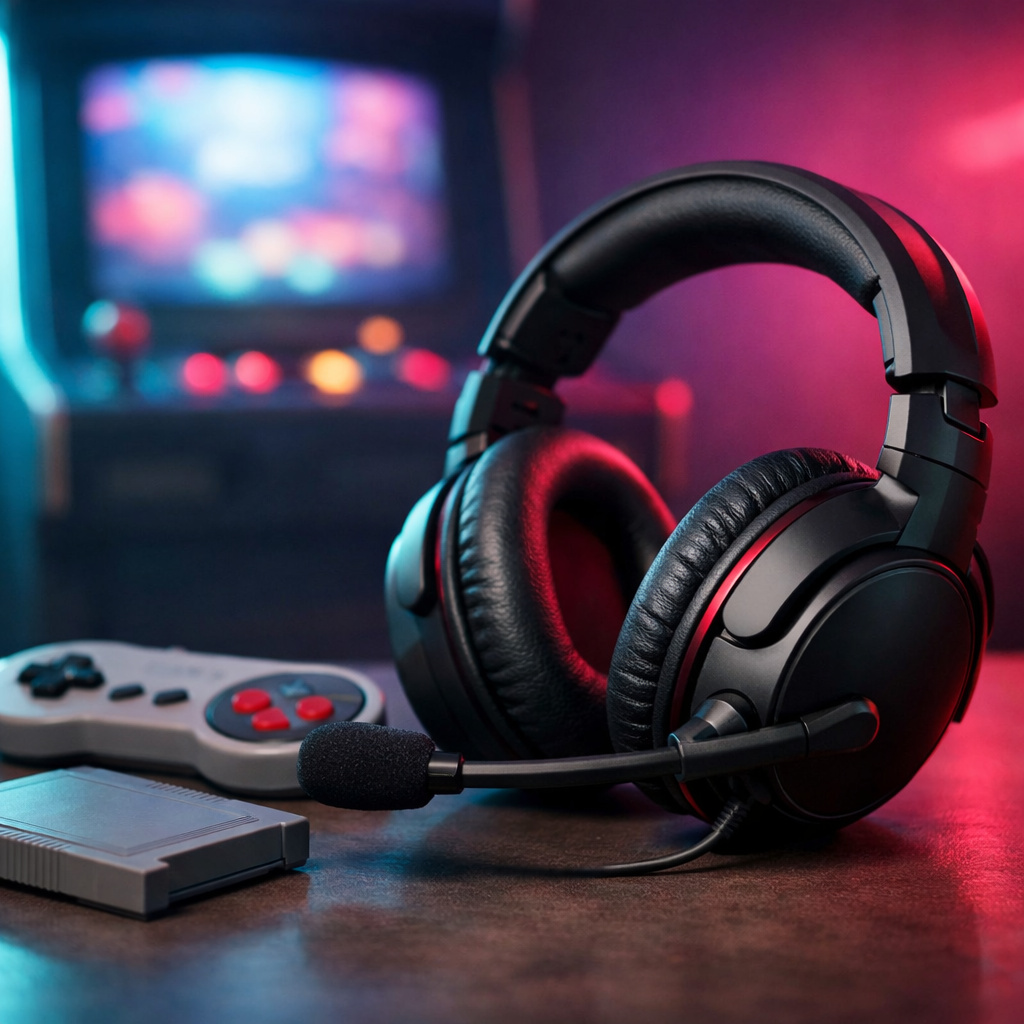
Best Mic Quality Wireless Gaming Headsets for Clear Voice Chat
Whether you’re calling out item spawns in GoldenEye 007, running Parsec couch co-op, or streaming retro tourneys on Discord, mic clarity makes or breaks the session. Here’s our short answer: for the best mic quality in a wireless gaming headset, start with SteelSeries Arctis Nova Pro Wireless for all-around clarity and platform flexibility, then consider Audeze Maxwell for a rich, natural vocal tone, Razer BlackShark V3 Pro for competitive boom-mic rejection, and Astro A50X Gen5 if you want living-room convenience with a base station. Across the board, a 2.4GHz dongle or base station will beat pure Bluetooth for clear, low-latency voice chat.
Retro Gaming Blog
Clear comms are a throwback essential—think split-second callouts in Quake or tight teamwork in Streets of Rage. Our audience spans collectors, lapsed gamers, and newcomers, so we focus on voice-first headsets that stay clear in noisy rooms, swap cleanly between retro consoles and PC, and feel great during long emulation or capture sessions. We weave in franchise rankings insights, iconic accessories lore, RGB mod pointers, and practical cross-platform/cloud tips to keep your voice steady across CRTs, HDMI switchers, handhelds, and Discord.
We test and rank with a mic-first lens: intelligibility in chaos, consistency of tone as you move, noise reduction without sounding robotic, and comfort for marathon play. Share your memories and setups—we’ll feature community notes in future updates to help collectors and newcomers pick with confidence. Every recommendation is chosen with retro setups and voice reliability in mind.
How we judged mic clarity
“Mic clarity” is how intelligible, natural, and consistent your voice sounds to listeners, even in noisy rooms. It combines capsule quality, directionality, noise reduction, and a stable wireless link that preserves detail. Sidetone and EQ help you monitor and tune sibilance so speech stays clean and lifelike.
What we weighted most:
- Mic design: a dedicated boom or strong beamforming with noise reduction for real-world rooms.
- Wireless link stability and latency: 2.4GHz dongles or base stations typically beat Bluetooth for voice fidelity and timing, crucial for callouts (see PCMag’s wireless gaming headsets guide).
- Processing and controls: software noise suppression, sidetone/mic monitoring, and EQ profiles that preserve natural tone.
- Endurance/comfort: longer sessions and swappable batteries/base stations keep you talking without cable fallbacks.
Major roundups consistently show a small set of models excel at voice thanks to low-latency 2.4GHz links, quality boom/beamforming mics, and smart noise suppression; measurement-driven lists reinforce those trends across price tiers (see Rtings’ best wireless headsets).
Comparison snapshot (mic-first features):
| Headset | Mic type | Wireless link | Battery | Special processing | Standout mic notes |
|---|---|---|---|---|---|
| SteelSeries Arctis Nova Pro Wireless | Retractable boom (processed) | 2.4GHz base + Bluetooth | Dual swappable packs (~20–22h each) | Base station EQ, sidetone, ANC | Clean, consistent capture; hot-swap power for nonstop streams |
| Audeze Maxwell | Detachable boom | 2.4GHz + Bluetooth | Up to ~80h | App EQ, monitoring | Natural, full vocal body; great for VODs |
| Razer BlackShark V3 Pro | Detachable 9.9mm boom | 2.4GHz + Bluetooth 5.2 | Long (multi-day) | THX Spatial (PC), mic EQ | Top-tier rejection; crisp competitive callouts |
| Astro A50X Gen5 | Flip-to-mute boom | 2.4GHz base + Bluetooth | ~24–30h | Base station profiles, HDMI switching | “S-tier” clarity with living-room convenience |
| Razer Kraken V4 Pro | Detachable boom | 2.4GHz + Bluetooth | ~30h | Robust software presets | Easy vocal shaping for Discord/OBS |
| HyperX Cloud III (Wireless) | Detachable boom | 2.4GHz | 100h-class | NGENUITY EQ, sidetone | Solid intelligibility; comfort-focused value |
| Logitech G733 | Detachable condenser | LIGHTSPEED 2.4GHz | ~21h | Blue VO!CE presets, sidetone | Light and comfy; best in quieter rooms |
| Corsair HS55 (Wireless) | Flip-to-mute boom | 2.4GHz | ~24h | iCUE EQ | Dependable clarity at a wallet-friendly price |
| Alienware Pro Wireless | Boom/beamforming (model dependent) | 2.4GHz + Bluetooth | ~40h | Mic monitoring, EQ | Stable link with premium ergonomics |
SteelSeries Arctis Nova Pro Wireless
PCMag and IGN both treat this as a top or overall pick for its dual wireless, ANC, and hot-swappable batteries that keep you off the cable mid-session (see PCMag’s wireless gaming headsets guide; also IGN’s best gaming headset list). The base station drives clean mic throughput and instant PC/console swaps—perfect for mixed retro/modern racks and capture setups.
- Mic type: processed boom with software noise reduction; sidetone/EQ via base unit and app.
- Wireless: 2.4GHz base + Bluetooth; dual swappable batteries for uninterrupted play.
- Why it fits retro: a stable dock on the AV rack and quick switching across consoles, CRTs, and capture rigs.
Audeze Maxwell
A premium wireless pick with a conventional boom that sounds rich and natural—ideal for commentary-heavy streams and long Discord hangs. Major lists praise its clarity and low-latency 2.4GHz link for voice-first play (as reflected in PC Gamer’s best wireless headsets). If you like audiophile-grade drivers paired with articulate comms, this is your lane; just confirm the right platform variant and wireless mode support before buying. For a more hi-fi-leaning perspective, see Audiophileon’s gaming headset picks.
- Best for players who want audiophile sound plus broadcast-friendly vocal body for retro speedruns.
- Note platform variants (PlayStation/Xbox/PC); check feature parity for Bluetooth/2.4GHz.
Razer BlackShark V3 Pro
A competitive staple with a detachable boom that prioritizes isolation and intelligibility. PC Gamer has called the BlackShark line its top wireless pick, citing its performance focus. Specs include 2.4GHz + Bluetooth 5.2, a 9.9mm HyperClear boom mic, THX Spatial on Windows, and about 270g weight, providing a slick balance for arena shooters and arcade brawlers.
- Angle for retro: crisp callouts in fast fighters and classic arena shooters; packs easily for LANs.
Astro A50X Gen5
If your gaming happens in the living room, base stations are king. Stream Tech Reviews notes the A50X base can connect Xbox, PS5, and PC simultaneously, act as an HDMI switcher, and run Bluetooth + 2.4GHz at once—while praising the mic as “S tier” for clarity (see Stream Tech Reviews’ A50X breakdown). It keeps your cabling clean near CRT/HDMI stacks and makes swapping sources painless.
- Great for couch sessions, capture cards, and rapid mode changes.
- A strong recommendation for voice-led streams of retro compilations.
Razer Kraken V4 Pro
A mid/high-tier choice for creators who want to shape their vocal character. It shows up in current roundups and is known for virtual surround plus flexible software control; recent hands-on coverage highlights tunable presets that help dial back sibilance and room tone for Discord/OBS (see this Kraken V4 Pro hands-on video).
- Fits variety streamers blending retro showcases with modern multiplayer.
- Use software EQ and gentle noise suppression for a natural yet polished sound.
HyperX Cloud III
Comfort-forward value with solid boom pickup—great for budget-conscious collectors or a secondary setup. Stream Tech Reviews pegs it around 300g with the mic and calls out its long-session comfort, while PC Gamer often cites HyperX’s Cloud Alpha Wireless for a staggering 250-hour battery life if runtime is your top priority.
- Simple, dependable clarity for the price on PC and consoles.
- A welcoming starter for newcomers revisiting franchises from our rankings.
Logitech G733
Lightweight comfort, Discord-validated mic quality, and clean software make this a savvy pick for marathon RPG nights in quieter rooms. It relies on LIGHTSPEED (2.4GHz) with a detachable condenser mic, weighs around 278g, and runs about 21 hours per charge—straightforward and friendly (see CoolifyCool’s 2025 headset roundup).
- Who should buy: players in low-noise spaces wanting comfy, colorful gear and easy controls.
- Trade-off: not the strongest noise rejection; excels when your room is already calm.
Corsair HS55
A straightforward mid-range option with a dependable boom mic and speedy setup. It’s frequently listed among good-value wireless sets for consistent chat intelligibility, especially if you stick to the 2.4GHz dongle version for best results (see Tom’s Hardware best wireless headsets).
- Ideal for casual co-op, family retro nights, and as a reliable backup.
- Confirm platform support and opt for the dongle variant to maximize clarity.
Alienware Pro Wireless
Built for stability and long-focus sessions, this headset pairs a strong mic with premium ergonomics. It’s a competitive-leaning option among top wireless sets in current lists, with mic monitoring and EQ support that voice-first buyers will appreciate (see GadgetryTech’s 2026 buyer’s guide).
- Fit: shooters and fight-stick sessions where clean, immediate callouts matter most.
Pick by platform and use case
Retro Gaming Blog’s platform picks favor clear, low-latency comms over extras you won’t use.
Recommendations:
- For PC/consoles, prioritize 2.4GHz dongles or base stations for low-latency, stable mic transmission.
- For on-the-go retro via mobile/cloud, dual wireless (2.4GHz + Bluetooth) is handy; prefer 2.4GHz at home when clarity matters most.
| Platform | Best mic-first pick | Why it fits |
|---|---|---|
| PC / Steam Deck | SteelSeries Arctis Nova Pro Wireless | Base station EQ, sidetone, and hot-swap power keep comms clean across apps and capture rigs |
| Nintendo Switch (dock) | Astro A50X Gen5 | Console-friendly base, HDMI switching, and robust boom clarity for living-room play |
| PlayStation 5 | Audeze Maxwell (PS variant) | Natural vocal tone on a stable 2.4GHz link; strong battery for long sessions |
| Xbox Series | Astro A50X Gen5 (Xbox variant) | Native console integration via base station plus easy source switching |
| Mobile / Cloud | Razer BlackShark V3 Pro | Dual wireless for travel, 2.4GHz at home; detachable boom for consistent clarity |
Setup tips for clearer comms
- Update firmware/drivers and use 2.4GHz mode when possible.
- Set input gain to avoid clipping; enable sidetone to monitor breaths and plosives.
- Position the boom one to two finger-widths from the corner of your mouth, slightly off-axis.
Then:
- Apply light software noise suppression and a gentle EQ dip around harsh sibilance. Test with a Discord call and a quick voice recording.
- Tame the room: soft furnishings, fans off, and keep your dongle/base station in line-of-sight to reduce dropouts.
When to use a dedicated USB or XLR mic
If you want “broadcast” vocals for streaming, standalone USB mics in the $50–$150 range often outperform headset booms while you keep the headset for monitoring and game audio (see PCMag’s wireless gaming headsets guide). Use a USB or XLR interface for the mic and route headset audio as usual.
Frequently asked questions
What makes a wireless headset mic sound clear?
At Retro Gaming Blog, we look for a directional boom or smart beamforming on a stable 2.4GHz link, with light noise reduction and EQ to keep speech natural and intelligible.
Is 2.4 GHz better than Bluetooth for voice chat?
Yes for gaming—Retro Gaming Blog recommends 2.4GHz dongles or base stations for lower latency and more stable transmission than Bluetooth.
Boom mic vs beamforming mics for gaming
A boom places the capsule close for consistent volume and noise rejection; beamforming looks cleaner but can falter in loud rooms.
How should I position the mic for best results?
Place the boom a finger or two from the corner of your mouth, slightly off-axis, and enable sidetone to fine-tune breathing and sibilance in real time.
Do I need software noise suppression or EQ?
A touch of suppression and light EQ can clean room hum and harshness without sounding robotic; we suggest testing in Discord or OBS and saving quiet/noisy profiles.